Showing posts with label Trevor Hildenberger. Show all posts

Tuesday, September 3, 2019

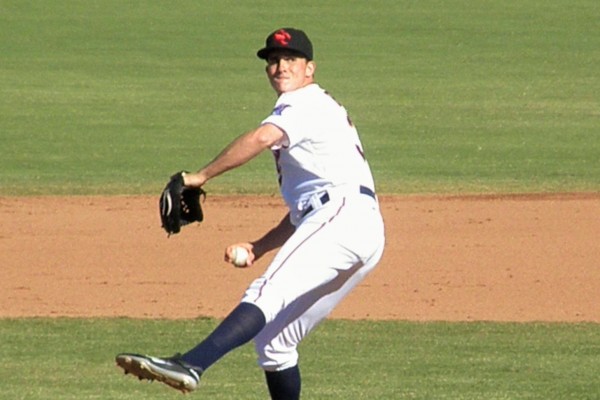
Hildy’s Back, Tell a Friend


There’s been no larger point of contention for the Minnesota Twins in 2019 than the bullpen. While the starting rotation has dealt with ebbs and flows, it was the relief corps that constantly faced criticism. After acquiring Sergio Romo and Sam Dyson at the deadline, the group improved. Brusdar Graterol has now debuted, and both Trevor May and Tyler Duffey have stepped up. It’s a September call up that could be among the most beneficial though.

Midway through the summer of 2018 Paul Molitor’s best and most trusted relief arm was Trevor Hildenberger. The side-armer owned a 2.80 ERA and .661 OPS against through his first 42 appearances a season ago. Unfortunately, those came in the Twins first 79 games. By all measures, Molitor had run him into the ground, and things went drastically off the tracks from there.

Hildenberger blew his first save on July 15 last year. He made 31 appearances from that point forward totaling a 9.64 ERA and 9.95 OPS against. Opposing batters teed off on his pitches and it carried over to the 2019 season. Starting the year in Rocco Baldelli’s pen, Trevor owned an 8.36 ERA through 14.0 IP before being optioned to Triple-A Rochester. The ineffectiveness continued there, and he was eventually put on the shelf.

Fast forward a few months and back to full health, Minnesota’s former high leverage on was on the track back to the bigs. Across eight post IL appearances (12.1 IP), Hildenberger owned a 0.73 ERA and .315 OPS against. He struck out ten batters and walked one while giving up just a single run on six hits. That’s obviously an incredibly small sample size, and almost half of that work came in the Gulf Coast League, but if we want encouraging signs then this is it.

There’s a lot we don’t yet know, and Baldelli doesn’t have much runway to figure things out. We can assume that Hildenberger will get something less than 15 innings the rest of the way to prove his value. What we do know is that this is a guy who has gotten it done for the Twins in the biggest of spots previously. Adding that type of arm to a Postseason run could be something substantial, and completely out of the question even a month ago.

With a lineup as good as Minnesota has, they’ll never find themselves out of a game. Now having significant options on the mound, they also find themselves in a much better position to make a run into October that had some serious uncertainties prior to the trade deadline. Adding pieces from outside of the organization was always going to happen. Arms emerging from within, and especially those who have previously shown a strong ability, is a testament to hard work and internal development.

If Hildenberger is truly back for Minnesota, that’s something everyone can get on board with.

Wednesday, May 15, 2019

Twins Searching the Cupboard for Arms


Coming into the 2019 Major League Baseball season, relief pitching was a very serious question mark. For the most part, the guys Minnesota’s front office has told us to trust in have looked the part. Ryne Harper has been a great story, and Matt Magill has flashed solid stuff. The back end of Taylor Rogers, Blake Parker, and Trevor May work. Unfortunately, that’s where things end.

There’s been a revolving door at the bottom of Minnesota’s bullpen, and the options to call upon are dwindling. Fernando Romero has been up multiple times, without seeing any significant success. He’s been knocked around at Triple-A, and despite great stuff, the transition to relief hasn’t gone smoothly. We’ve seen Tyler Duffey a few times, and despite dominating Triple-A, the beautiful bender has yet to see solid run in the big leagues.

Rocco Baldelli has been given lefty Andrew Vasquez, and former starter Adalberto Mejia looks to have flamed out. Addison Reed was on a path back through a surprise rehab stint, but he’s been hit around the park for Rochester. The only other 40-man option is lefty Gabriel Moya, who has also been bad since returning to Triple-A and hasn’t ever shown a significant level of success at the big-league level.

Non-40-man options are also a difficult ask at this point. Jake Reed was going well for Rochester but has hit the skids. D.J. Baxendale and Ryan Eades have gaudy ERA numbers and are allowing far too much contact. Beyond that, you’d need to dip another level down and be relatively convinced that the big jump would be warranted.

The good news is that the Twins are 27-15 while looking in command of the AL Central. The bad news is that Trevor Hildenberger nearly surrendered a four-run lead, and Mike Morin was called upon to face both Mike Trout and Shohei Ohtani in massive spots today. If that development alone doesn’t call for some action, I don’t know what does.

Craig Kimbrel still is unsigned and can be acquired for nothing more than cash. Yes, at this point you’d need to part with a draft pick to sign him. Waiting until after the draft could be smart, but the number of teams willing to bring him in without pick compensation being thwarted likely rises in number as well. On the trade front, there’s more than a handful of bad teams that can part will relievers. Typically deals are consummated in late June at the earlier. Though the asset capital may be higher when looking to acquire talent earlier in the year, it’s worth weighing what the immediate and extra impact would be should they get into Wes Johnson’s hands sooner.

At the end of the day it boils down to the simple principle that the Minnesota Twins have opportunity in front of them. Given their trajectory and roster construction, this isn’t a team that should be playing for 2020. You don’t need to mortgage the farm for a one-year run but capitalizing in years where you can make noise is a must. Right now, the greatest deficiency this group has is its bullpen. Although the collective has held strong, it’s been on the back of a small inner group that is going to be burned through come summer.

Monday, April 22, 2019

Have Hildy, Won’t Travel


Fairly, the Minnesota Twins bullpen has been a lightning rod of discussion in 2019. From talks about what more could be done, to the breakdowns that have cost the club a couple of games, this group will remain under the microscope. With the bright lights on them, internally developed arms have been the anchors at the back of the group. Arguably the most impressive reliever has been Trevor Hildenberger, and that’s a development Twins fans can get behind.

Hildenberger was a 26-year-old pitching at Triple-A Rochester in 2017. He owned a 1.57 ERA across 171.2 minor league innings pitched, and as a 22nd round pick out of Cal Berkeley, was never lauded as a top prospect. Despite an impressive 10.5 K/9 and 1.4 BB/9 in his time on the farm, he needed to scratch and claw his way up the ladder to the big leagues. Owning a low-90’s fastball, this was a sidearmer that does it through deception more than velocity. Plenty of things can go wrong for a guy like that, and after initial success, they did.

As a rookie in 2017, Hildenberger quickly became one of Paul Molitor’s favorite options out of the bullpen. Across 42 innings he posted a 3.21 ERA backed by a 3.02 FIP and 9.4 K/9 with a 1.3 BB/9. Essentially, he continued to be everything he was on the farm and then some. Going into 2018, Molitor continued to rely on his new toy, but this time likely rode him right into the ground. Posting a 2.06 ERA through his first 36 games, Trevor had been used in almost half of the Twins contests for a total of 39.1 IP. From June 30 forward, Molitor turned to Hildenberger another 37 times for a total of 33.2 IP that saw him turn in a 9.36 ERA.

Fast forward to 2019 and we’ve got a fresh Trevor Hildenberger with a few more pen options to turn to. On the season, Trevor has thrown 7.2 IP allowing no earned runs, striking out 11.7 per nine, and giving up free passes at just a 2.3 BB/9 clip. To put it mildly, Hildenberger has been nothing short of exceptional. We have been down this road before however, and Minnesota will need to monitor workload to avoid a second straight season of burnout.

The Twins have played 19 games thus far, and Hildenberger has pitched in 11 of them. The 19 inherited runners Trevor has been handed is the most in baseball, and his 14 inherited runners stranded is five more than Rangers reliever Shawn Kelley, who comes in second. Operating as the Twins fire man, Hildenberger has come in during the highest of leverage, and slammed the door at a relatively high clip.

It’s not so much that it’s a surprise Minnesota is getting solid production out of Hildenberger. He’s proven capable of performing in big moments for significant stretches over the course of his major league career. What we’ll need to keep tabs on, and be mindful of, is how much this could factor into potential issues down the stretch. Right now, Hildenberger, Taylor Rogers, and Blake Parker have been assets for Baldelli. Ryne Harper has been a nice surprise, and there’s some potential reinforcements on the way. Generating more production that that of just four or five arms is a must, however. Another option must emerge so that it’s not always on Hildenberger to carry the load.

Good news is that Minnesota looks to have their developed relief star back to himself in 2019. The flip side is that they’ll need to avoid going down a similar path to what took place a year ago. For now, though, take solace in the fact that when a sidearming righty runs in with runners on, they’re likely to wind up failing to cross home plate.

Monday, January 14, 2019

Closing Time for the Twins


As of this writing the Minnesota Twins have made just one move to solidify their bullpen for 2019. Snagging non-tendered reliever Blake Parker on a one-year deal, Rocco Baldelli’s relief corps hasn’t been overhauled by any means. Knowing the innings will need to be allocated across the group in the season ahead, there’s plenty of uncertainty when attempting to determine roles. From a traditional sense, that’s a fine determination. For those concerned with such things however, we’re left wondering who closes things out?

On January 14 the Parker deal was made official. It is a $3.2 million pact, but the oddity is that only $1.8 million is guaranteed. The former Angel receives a $1.4 million sum if he is on Minnesota’s active roster for 160 days. It’s a weird stipulation that needed to be agreed to for a guy who’s put up solid numbers over the past two years. Being non-tendered is one thing, but this almost makes it look like Parker didn’t have great prospects elsewhere either. Regardless, I believe he can help Minnesota’s pen.

Pitching for Los Angeles each of the past two years Parker earned 22 saves. Never tabbed the closer from the get-go, he’s filled in during times of need and done so admirably. A high strikeout and strong command pitcher, Parker has the makings of a guy able to succeed in the 9th or a setup role. From there, things get less certain.

If there’s a “proven closer” among the current bunch it’s Addison Reed. Signed to a two-year last winter, Reed was expected to be a difference maker for the Twins. He flopped and battled injury in Minnesota but has always shown so much more. He was far too hittable last season but remained relatively strong in terms of limiting walks. With 125 saves to his credit, operating as a closer is something he’s familiar with. In talking with Reed last spring, he told me he could care less about the save aside from grabbing some prior to arbitration. Should Minnesota be able to right the 30-year-old on a path that he had previously been on, they’ll have a strong late inning reliever no matter where he’s used.

From an internally developed standpoint Minnesota has only two options. Trevor May and Trevor Hildenberger look like the most logical fits. The former is a converted starter that seems to be able to amp it up in relief, why the latter is a crafty reliever who’s used deception and stuff to fuel a level of dominance out of the pen. I’d suggest May as profiling more towards your prototypical closer, but it’s clear that Hildenberger has found success in that arena as well.

The Twins watched a further breakout from Taylor Rogers in 2018, and while his numbers are spectacular, I think he continues to slot in best during optimal high leverage. Being called upon situationally late in games allows for him to dictate matchups and utilize his best stuff for getting opponents out. Fernando Romero looks like he could be headed to the pen this year, and the blazing fastball would certainly play up in relief. Over time I’d be far from shocked if he doesn’t force himself into high leverage. Initially, Minnesota may be cautious to keep him stretched out, and even if not, asking him to immediately work the most important innings could be a tough ask.

From here Baldelli won’t have much to turn to. J.T. Chargois is gone, John Curtiss was just DFA’d, Jake Reed has yet to be promoted, and Tyler Jay is still on the farm. If there’s someone outside of the previously mentioned big league names ready to reign in the closer role for this club, they aren’t currently on the roster. Cody Allen continues to be a name that makes so much sense, and I’ve heard rumblings that the interest is mutual. Until that deal comes to fruition however, it’s a wait and see sort of scenario.

Even with an Allen marriage in Minnesota, this collection is setting up like a group that will rotate the hot hand rather often. Allen has recorded at least 24 saves in each of his five seasons operating as the Indians closer, but the Twins could see something like five different players record marks in that category. From both a developmental exercise to a best fit scenario, the Twins relievers possess a wide spectrum of potential outcomes for the 2019 season. The best-case scenario looks to be a collection that succeeds by being quality over the sum of its parts. There probably isn’t going to be a runaway fireman called on at every opportunity but being able to adequately operate together gives this group promise.

Right now, today, it’s hard to envision the Twins front office feeling good about where the relief corps is at. The bulk of the work has been done, but another signing seems almost necessary. We’ll know more about who takes what role, when, as spring training gets underway. There’s going to be uncertainty for this group regardless, but I think it’s less damaging than immediately may be assumed.

Thursday, January 4, 2018

Pen Provies Possible Upside In Minnesota

As things stand, the Minnesota Twins have made two moves regarding their bullpen this offseason. In signing both Fernando Rodney and Zach Duke to one-year deals, they bring in proven veterans with skills in all the right places for the Twins. It seems Derek Falvey and Thad Levine sent a message in their relief acquisitions, and looking back to 2017, it is one that should be well received.

While teams have long since began venturing down the path of super bullpens, some of them go about it differently. At their peak, the Kansas City Royals seemed to do it more organically, while the Cleveland Indians moved some pieces around, and the current Colorado Rockies just threw money at everyone with a pulse. The idea that a start can be shortened through a strong bullpen is a good one, but it isn't a band-aid that can be applied to every organization.

For Minnesota, the reality is that both the starting pitching and relief staff needed work. With the cost of acquiring a starter being what it is, spending top dollar on a minimal impact role like a reliever is a tough ask. Instead, the Twins got creative by targeting high strikeout guys with strong track records. On top of that, they did so without much potential for negative repercussions considering the length and terms of each deal.

Where this story starts though, is at the beginning. Looking back to 2017, it's hard not to see Paul Molitor and his staff in a much better place when having to deploy relief help. There's no arguing that the Twins don't have an elite pen (or maybe even an above average one), but much improved is something they should have in spades.

On Opening Day of 2017, the Twins trotted Tyler Duffey, Michael Tonkin, Justin Haley, Ryan Pressly, Matt Belisle, Brandon Kintzler, Craig Breslow, and Taylor Rogers out to the bullpen. Of that group, only three remain, and each of them should find a spot in the 2018 pen from the jump. Assuming Minnesota goes with seven relievers (after beginning with eight a year ago), I'd imagine the group consists of: Duffey, Rogers, Pressly, Trevor Hildenberger, Zach Duke, Alan Busenitz, and Fernando Rodney.

Looking at the holdovers, you have two guys that have the ability to pitch in high leverage. While Pressly is the velocity guy, Duffey worked as a closer in college. Both can put the ball past opposing hitters, and looking for K/9 rates above 8.0 should be a safe assumption. In Rogers, Molitor gets a guy that was tested in his second year, and showed he can get batters out on both sides of the plate. Moving more towards the middle innings, he can act more as the second lefty, and be somewhat of a specialist.

In categorizing the additions, the Twins have a lot of new weapons at their disposal. Despite his age, Rodney is still pumping fastballs in the upper 90's. Yes he walks batters, but over the course of a full season, it's hard not to see him being an asset. Duke returned from Tommy John in record time, and the biggest takeaway from 2017 for him was health. He's a year removed from a 10.0 K/9 with the bulk of the season spent in the AL Central. Hildenberger and Busenitz both stepped in huge down the stretch for Minnesota a season ago. The former looked the part of a potential closer, while the latter is another velocity arm (95.8mph) that should see the strikeouts rise.

Given that this group is relatively established, and there's a bit more depth behind them, the Twins can feel a bit more at ease about their current positioning. We've been waiting on top relief arms to surface for some time, but names like Hildenberger, Busenitz, and John Curtiss simply stepped up first. Should J.T. Chargois, Tyler Jay, and Jake Reed see their time come in 2018, the overall water level for the relief corps will only continue to rise.

At the end of the day, the Twins bullpen isn't going to wow anyone on paper. For fans who've followed the organization however, it looks like one of the better groups in quite some time, and one that speaks to a certain level of sustainability. It took some time to get away from the soft tossing aspect in relief, but that doesn't appear to be the plan of action for anyone (save for Duke) who will enter the field from behind the wall. It may all blow up when the action actually starts, but there's reason for optimism with the current collection to be sure.

Monday, June 19, 2017

A Leap To Prevent A Dive: The Twins Looming Decision

The Cleveland Indians came into Target Field and punched the Minnesota Twins right in the mouth. Not only were the Twins swept, but their lead in the AL Central is all but gone. What's worse is that what took place over the weekend (especially Saturday) may happen more often than not. The unfortunate reality is that the Twins just don't have starting options.

For game one of a double-header against arguably the division's best team, the Twins sent out a sacrificial lamb in the form of Adam Wilk. The journeyman lefty has never been given more than 14 innings in an MLB season, and he owns a 7.36 ERA at the big league level. Simply put, he's not qualified to be attempting to retire major league hitters. All of this information was known going into the tilt with the Indians, and there wasn't much Minnesota could do about it.

Sure, Wilk isn't who the Twins would prefer to run out to the mound (he was DFA'd immediately following his outing), but they are sparse on options as well. Already nine starters deep this season, both Phil Hughes and Hector Santiago is currently shelved. There's been talk of both returning as relievers, but that is likely only to mask the sunk cost and unfortunate truth that effectiveness eludes them both.

That leads us to where the Twins currently find themselves. The 2017 season has 95 games left for the Twins, and they're 2.0 games back in a pretty poor division. Realistically though, the playoffs weren't something seen as a possibility coming into the campaign, and the slate thus far has provided quite a bit of surprise. With the window being fully opened (with a few pieces added) in 2018, Derek Falvey and Thad Levine have to decide what to do with what's left of 2017.

On the farm, there's a few answers, but development will likely need to come into the question. The largest area of deficiency for the Twins still stands on the mound. Both starting and relief options have been lackluster at best, and the system itself has a few options for the big club to consider.

Adding to the starting options, Double-A includes the trio of Fernando Romero, Felix Jorge, and Stephen Gonsalves. Both Romero and Gonsalves have an injury history, and are likely being monitored for health going forward. They represent no less than middle-of-the-rotation upside, and both (at their best) can be impact arms for Minnesota. Making the leap from Double-A is a steep one however, and a promotion may not be in the cards under more normal circumstances. Jorge can be a back-end big league starter, and while a quick promotion may stunt a little development, he could be argued to be the most ready.

If the Twins weren't in a place where they were having to draw straws for a starter every other night, there's probably no talk of any Double-A arms going anywhere but Triple-A Rochester. Given the circumstances though, the front office must at least consider if it's beneficial to provide a boost to the big league rotation with one of the top arms on the farm. There will be innings limits to monitor, and rough patches to be expected, but the alternatives haven't provided much more upside.

Out of the bullpen, similar scenarios reside for the Twins. Alan Busenitz was finally given a shot, but the farm still holds guys like Trevor Hildenberger, Mason Melotakis, Jake Reed, and John Curtiss. Hildenberger has paid his due at Triple-A and would be a worthy call at this point. Melotakis was recently promoted to Rochester, and probably could've skipped the level. Reed has pitched in Triple-A before, and Curtiss looks the part of a guy that can get big league hitters out.

Each of the aforementioned names have their warts, but the present more upside than a handful of the current relief contingent. The Twins would have less to lose throwing a reliever into a big league scenario than the starters they'd be considering, but the jump is still not one to be taken lightly. The pen is an area that needs vast improvement, and having not signed multiple vet replacements this offseason, it would appear that an influx of youth makes the most sense.

For a team that has a terribly negative run differential, and has been playing above water due in large part to offensive performance, real questions need to be addressed. At this point, I think we can safely rule out any reason for this team to be "buyers" in another month, but they maybe should consider supplementing from within. Although they'd likely have to disregard normal timelines, jump-starting a prospect's career at the big league level could provide benefits for all. If a young arm flops right now, they have knowledge necessary to compete a year from now. If things break right, Minnesota ends up with the needed influx of talent.

What is easily apparent however, is that this club can't continue to shuffle bodies on the mound. They won't play competitive baseball that way, and they aren't building for anything in that scenario either.

Wednesday, February 22, 2017

Closing Out The Twins

Early on in spring training, Thad Levine said that Brandon Kintzler would be "given every opportunity to start the year in the closer's role." That statement all but solidified the assumed reality that Glen Perkins will open 2017 on the disabled list for the Minnesota Twins. What's worth wondering is, who closes out the most games for the hometown nine when the dust settles?

For Minnesota, having an elite closer in a season that .500 looks to be a solid effort, there's no denying that being anything but a luxury. However, given the way the sport has trended, bullpens are anchored by the guy who can slam the door on a victory. Although Paul Molitor won't have Aroldis Chapman to call on out of his pen, he'll have some solid options even if it isn't Kintzler that racks up the biggest number.

So who are the candidates and where do they fall?

Brandon Kintzler

Coming in as the incumbent, Kintzler will likely get the longest leash of any pitcher entering in the 9th inning for Minnesota. He racked up 17 saves a year ago and did so to a respectable 3.15 ERA. The problem for Kintzler could come in the fact that he simply doesn't miss bats. He totalled just 5.8 K/9, and that's not far off from his 6.5 career mark. Throwing just 92 mph, he doesn't bring swing and miss stuff, and if there's a place that it falls apart, that could be it.

Glen Perkins

Perkins is a three time All-Star, and pushed his Twins career saves total to 120. He's held his own in the role since the 2012 season, and outside of injuries, he's been one of the best under-the-radar-pitchers in the game. That injury though, it's real, and it's scary. Perkins had to have his labrum reattached to the bone, and his shoulder may never be the same. He's going to open the year on the DL, and frankly, I'm not sure he should be relied upon in any great measure for the rest of his career.

J.T. Chargois

A college closer, Chargois has been among the touted fireballing relievers coming up through the Twins system. He beat the likes of Nick Burdi and Jake Reed to the show, and there's plenty of reason to be excited about him sticking. While his first 23 MLB innings were a mixed bag, that 96.6mph average on his fastball is legit. Chargois is going to need to settle into the highest level, but the Twins would gladly welcome his minor league career 10.6 K/9

Ryan Pressly

A former Rule 5 draft pick, Pressly has long been one of the most underappreciated arms in the Twins pen. Last season, his fourth in the big leagues, Pressly picked up his first save. He's generated a nice 7.8 K/9 over the past two seasons and his velocity sat at a career best 95.2 mph average in 2016. If inexperience is working against Pressly, it might be wise to be reminded that Glen Perkins had to start somewhere as well.

Tyler Duffey

Maybe thrown in somewhat for fun, but Duffey has a legitimate reason to be named in this space as well. He was college teammates with Chargois at Rice, and the operated as co-closers. Working as a starter for the Twins thus far, I think Duffey's best cast as a relief option. He has a three pitch mix that's focused mainly around a fastball and a curveball. His 90.4 mph velocity should see an uptick with lower usage rates though. I'd put him in a middle innings role first, but Duffey could work his way to the back of the bullpen.

The Best of the Rest

If one of these guys ends up leading the Twins in saves during the 2017 season, the injury bug has a wrath that really has no fear. Regardless, Nick Burdi, Jake Reed, and even Trevor Hildenberger could all be in line to call the closer space their home in the not-so-distant future. Burdi is the hardest throwing of the trio, while Hildenberger is the most advanced at this point. Each of them has some command issues to deal with, but expecting them to be quality big league pen options seems like a really good bet.

If you ask me to put money on it right now, I'd go with J.T. Chargois leading the Twins in saves this year when everything is said and done. I think Kintzler works better as a lower leverage type, and I just don't know what to expect out of Perkins. Pressly would be a fun option to run out there, but I'm not sure the Twins will move him out of his setup-type role.

No matter who closes games for the Twins this year, Paul Molitor will be hoping they have ample opportunity.

Thursday, November 10, 2016

Prospects On The Way For 2017

A year ago, the Minnesota Twins had one of the best farm systems in all of baseball. There was a ton of top tier talent, and the bulk of it was near major league ready. Miguel Sano had paved the way by making his debut in 2015, and there was plenty of youth on the way to the Twin Cities to join him. This season, the Twins won't have quite that level of prospect talent, but there's reinforcements on the way.

Prior to free agency getting underway, and the Twins shaping their 40 man roster for the 2017 season, I wanted to take a look at what internal options Paul Molitor should have. Of the eight players I named last season, four of them made their major league debuts. Here's to hoping I hit on a bit higher than 50% this time around.

Jake Reed- May

A repeat from last year, I expected Reed to debut in 2016. Unfortunately he had a slow start at Double-A and couldn't get things consistently going in his favor. The command issues persisted for him at Chattanooga while he walked 3.3 per nine. His strikeout rate jumped to 9.6 per nine, which was a nice boost. A strong finish to the season had him promoted to Triple-A for just over 10 innings, and he was worthy of a September call up. Of the Twins relief options heading into 2017, it should be Reed who's called upon to provide a boost first.

Nick Burdi- June

Another 2016 holdover, Burdi threw just three innings last season. Dealing with a spring training fluke injury, and then arm injuries throughout the year, it was essentially a lost campaign. Burdi brings the heat and can touch 100 mph when healthy. Minnesota will need to make sure his arm is in good shape early this spring, and you can bet that they'd like to have him in the big leagues sooner rather than later. Burdi's younger brother Zack was a first round pick last season by the White Sox and is already at Triple-A; you can bet there might be a little family rivalry to see who can get to The Show first.

Stephen Gonsalves- July

The next pitcher on the list of starting prospects the Twins need to pan out is none other than the 2016 Minor League Pitcher of the Year. Pitching at both High-A Fort Myers and Double-A Chattanooga, Gonsalves dominated each level. His 10.0 K/9 was very strong, and while his 3.7 BB/9 number isn't ideal, it was inflated by some clunker outings. His stuff isn't as electric as that of Berrios, and he profiles as more of a middle-of-the-rotation starter, but after a brief time in Triple-A to start 2017, he should be at Target Field by the middle of the summer.

Trevor Hildenberger- July

Hildenberger is one of the more interesting names on this list. He's 25 and not a top 100 prospect, but he's one of the better relief arms in the Twins system. He doesn't throw quite as hard as Burdi and Reed, but working as the Double-A closer in 2016, he was about as sure of a thing as it gets. Throwing 38.2 IP in 2016 for Chattanooga, Hildenberger struck out 10.5 per 9 walking just 1.4 per nine. He was shut down with an injury to end the year, but could've made the jump from Double-A to the big leagues. Not currently on the 40 man roster, Hildenberger should be added soon and can provide some punch down the stretch.

Mason Melotakis- August

The Twins, are least the former regime, definitely see something in Melotakis. He was added to the 40 man roster in 2016, and was sent to pitch in the Arizona Fall League this year. After missing 2015 due to injury, Melotakis pitched all of 2016 at Double-A Chattanooga. In 33.1 IP he struck out 11.3 per nine. Minnesota needs more strikeout types out of the pen, and Melotakis looks like he could be just that. At 25, he's on the verge of getting up there in age, but if he can show well early in Triple-A, he should find himself in the big league clubhouse to end the year.

Tyler Jay- September

In regards to Jay, there's a couple different ways that 2017 could go, and a lot will depend on how Derek Falvey and Thad Levine view the former first round pick. He was exclusively a reliever in college, and his transition to a starter has been a process. Jay will almost certainly begin 2017 at Double-A and should finish the year at Triple-A. If starting doesn't work out or the Twins need him sooner, Jay could definitely be used out of the pen almost immediately.

Mitch Garver- September

Suggesting that Garver doesn't see the big leagues until September comes with a significant disclaimer; the assumption being that Minnesota signs or trades for a starting catcher prior to 2017. Garver should've seen his debut last September, and he had significantly more purpose being a big leaguer than Juan Centeno did a season ago, but he was skipped over. Should a new starting backstop come into the fold, Garver is likely going to have to overtake John Ryan Murphy for backup duties, and will likely spend the bulk of the year at Triple-A. He's solid defensively, has a good arm, and is coming off an .815 OPS in his first 22 Triple-A games. I'd like to see Garver get his chance sooner, but acquisitions could prevent that.

Zack Granite- First One Out

Maybe the most unknown commodity on this list, Granite is far from one to be overlooked. He was the Twins Minor League Hitter of the Year and put up a career best .729 OPS at Double-A Chattanooga. He's not flashy at the plate, but his speed and defense will play at any level. In 127 games. he swiped 56 games and ripped off eight triples as well. For a big league club that has employed the likes of Shane Robinson and Robbie Grossman as 4th outfielders the past few years, Minnesota would be hard-pressed to do worse than their own internal speedster.

As noted above, this list might not have the top 100 prospect types that the 2016 version showed off, but there's a lot of big league talent here that can make an impact in an organization looking for difference makes.

Thursday, July 28, 2016

Twins Pen Showing Its True Colors

A season ago, the Minnesota Twins had one of the worst bullpens in baseball. Just narrowly missing out on the playoffs, a better relief corps could have been enough to get them over the hump. This season there were some holdovers and some dart throws to the pen, but no player has been more important, both in reality and principle, than Taylor Rogers.

Rogers, a 25 year old rookie, has now pitched 35.1 innings for Paul Molitor's club. An 11th round draft pick out of Kentucky in the 2012 Major League Baseball draft, Rogers went from minor league starter to big league reliever. Posting strong numbers at Double and Triple-A the past two seasons, Rogers looked deserving of a chance, but one that likely was destined to come in the pen.

If there's been something that's held true over his minor league career, it's been a level of consistency from Rogers. At Double-A New Britain in 2014, Rogers posted a 7.0 K/9 with a 2.3 BB/9 to total a 3.29 ERA. He followed that up a season ago with Triple-A Rochester to the tune of a 6.5 K/9, 2.3 BB/9, and a 3.98 ERA. Although nothing necessarily stood out as dominant, it was apparent that Rogers had honed his stuff to the level that he was able to compete as he rose the organization ladder.

In reaching the big leagues though, it's in the pen that Rogers has taken a step forward.

Generally, pitchers will watch their numbers play up in relief. Being able to throw harder for a shorter period of time, the results generally improve. I've pegged Rogers as a solid relief option for the Twins for a while now, and through this season, he's made good on that bet. Thus far, the former Wildcat owns a 2.80 ERA and has pushed his strikeout rate to 9.2 per 9 while decreasing his walk total to just 1.3 BB/9. in the midst of his impressive big league performance, Rogers owned a 16.0 scoreless inning streak, and struck out 18 while walking just one over that time frame.

To summarize, Taylor Rogers has been nothing short of exceptional for the Twins.

As I mentioned earlier though, Rogers signifies more than just a success story for Minnesota. He's part of a bigger puzzle piece that both Paul Molitor and the organization have to be willing to rely upon. Taylor Rogers is a product of development with the Twins, and one that has resulted in a quality relief arm. The reality is that there are significantly more on the way, but none that are being given the same belief or opportunity.

Just a level down, the Twins have J.T. Chargois dominating Triple-A. He was the lone organizational representative in the Futures Game, and he has the makings of a future closer. Through 100 games on the season, Minnesota has allowed Chargois just two big league outs. Despite owning a 1.12 ERA with an 11.0 K/9 and 2.0 BB/9 at Rochester, Chargois opportunities has yet to be recalled.

Another level down, Trevor Hildenberger, Zack Jones, and Jake Reed are experiencing similar success at Double-A Chattanooga. Working as the closer, Hildenberger owns a 0.70 ERA, has tallied 16 saves, and is striking out more than 10 per nine innings. Jones, now healthy after returning from the Brewers organization following a Rule 5 selection, owns a 1.26 ERA through 14.1 IP. His 10+ K/9 has also played well in the Southern League. Rounding out the group, Reed owns a 3.88 ERA, that has been a 2.54 ERA across his last 28.1 IP. In totality, the three of them have consistently outperformed the competition of their current level.

If Rogers has taught the Twins anything, it's that they need to trust their own process (or part of it). Minnesota has failed to develop a quality starter for quite some time now (here's to hoping Jose Berrios breaks that trend), but the relief options have been promising. Michael Tonkin was underutilized a season ago, but didn't have the ceiling of any of the aforementioned names either. Now though, with a bad team and mediocre pen, it's time to promote more of those from the lineage of Rogers.

There's no reason Hildenberger, Jones, and Reed aren't at Triple-A. There's reason to suggest that they could even make the leap to the big league level at this point. Chargois should be up and given run as well. Through 100 games, the Twins haven't been very good, and the ship isn't going to be turned around. A season from now though, it's these names that should anchor what could be a pen comprised of arms with much higher ceilings, and getting them situated now makes way too much sense.

Minnesota had some nice hits on players like Buddy Boshers, Fernando Abad, and Brandon Kintzler, but they mean little going forward. It's time to trust the process that Taylor Rogers is proving has worked, and take off the training wheels hitched to some very projectable pieces that will be incredibly valuable in the years ahead.

Monday, November 23, 2015

Fall Sets Up Big Future For Twins Prospects

Nick Burdi- Knuckleballs Blog
Back in October, I wrote about the Twins and their seven players headed to the Arizona Fall League. The focus was on what each of them needed to improve or work on over the next two months, and how they could end 2015 on a high note. Over the weekend, each of them became Arizona Fall League champs, and it was because of their success that the title was claimed.

As I tweeted out over the weekend, baseball is no doubt a team sport, however it was the Twins group that carried this team during the title game. Taylor Rogers got the start and went 3.0 scoreless, striking out two and picking up the win. Adam Brett Walker drove in three of Scottsdale's six runs, and the game was closed out by both Jake Reed and Nick Burdi. To put it mildly, the Twins stars shined over the weekend.

Looking back at the Fall League as a whole, the majority of the Twins prospects did themselves some considerable favors. Starting with the two guys who have now won back-to-back AFL titles, Rogers and Reed, 2016 is shaping up to be a great year.

Rogers was second in the Twins minors leagues in innings pitched this past year. He's a lefty who has good command and looked impressive for most of the Triple-A season. He established himself as Scottsdale's ace in the AFL and his 2.88 ERA and 21 strikeouts across six starts was a very good way to end the year. He may begin the season with Rochester, but he's a definite bet to contribute for the Twins in the year ahead, likely out of the bullpen.

After an impressive showing a season ago, Reed improved in his second AFL stint. Pitching in 10 games, the former Oregon Duck surrendered zero earned runs. He threw 10.2 IP giving up just six hits while striking out ten and walking just four. If the Twins are going to improve their bullpen in 2016, giving Reed a shot at some point would seem to be a good idea.

Staying with the bullpen, Nick Burdi was equally impressive in the Fall League. He gave up his lone run on a solo homer in the title game, but was lights out otherwise. Burdi was an inclusion in the Fall Stars game, and his command was impeccable owning an 11/1 K/BB ratio across 8.0 IP. Trevor Hildenberger also did some really nice work in relief this fall. His 12.2 IP were second highest for Scottsdale in relief. He owned a 2.13 ERA and struck out 12 while walking none. Although he played at Fort Myers a season ago, the strong showing against superior talent bodes well for his 2016 trajectory.

Then there's the offensive side of things. Starting anywhere but with Adam Brett Walker would be misguided. His Fall was very similar to the rest of his 2015, very mixed. While he was also the hero in the title game, it was his strikeout numbers that continue to cause reason for pause. His final slash line rested at .240/.326/.493 with five homers and 18 RBI. The issue though is that the strikeout week actually got worse. In Double-A this year, Walker averaged 1.65 K per hit, 1.47 per game, and 6.29 per home run. In AFL action, he averaged 1.94 per hit, 1.75 per game, and 7.0 per home run. Those numbers are going to determine whether or not he can contribute at the next level.

It's almost a certainty that Walker starts 2016 at Triple-A, and as a top 10 Twins prospect, Minnesota wants to see him succeed. However, he is not going to be a viable contributor at the big league level based on power alone. He's well behind the likes of Chris Carter, Mark Reynolds, or Adam Dunn in their minor league careers. In the year ahead, it's about making more contact, working on plate discipline, and reducing the ugly strikeout numbers.

Rounding out the offensive grouping for the Twins in the fall are two catchers who had vastly different results. Stuart Turner continued along the path of being a defensive guru who can't hit. He slashed a Scottsdale worst .171/.306/.220 and totaled just two extra base hits in 12 games. The Twins still have significant reason to hold out hope (lack of catching depth being one of them), but Turner needs to hit in the year ahead.

On the other hand, Mitch Garver shunned his regular season numbers by having an impressive fall campaign. The backstop slashed .317/.404/.512 across 12 games and cranked out five doubles and a homer. He handled the bat well in 2014 before taking a step backwards this past year. If the fall production can carry over into 2016, Garver could vault himself up the ladder and into the Twins plans sooner rather than later.

As a whole, the Twins deep farm system was extremely impressive during action down in Arizona. It was pitching that owned the season, but the group set itself apart. Knowing that the big league club is getting ready to turn the corner, a couple of these contributors should be expected to be front and center in the revolution.

Tuesday, October 13, 2015

Twins Gaining In Arizona Fall League

The Major League Baseball Arizona Fall League kicks off and with it, a handful of Twins prospects continue their development. Now playing in games against some of the most talented prospects in minor league baseball, they will be given another measuring stick opportunity. Competition regarded as higher than most of what is faced in a typical minor league game, the "All Star" rosters of sorts go at it.

For the Twins this season, seven players have been asked to compete for the Scottsdale Scorpions. After being affiliated with the Salt River Rafters a season ago, the Twins filled Scorpions will face off against Salt River in game one. The seven players on the squad include: Adam Brett Walker, Stuart Turner, Mitch Garver, Nick Burdi, Taylor Rogers, Jake Reed, and Trevor Hildenberger.

As much about competing and continued development, the Arizona Fall League is about working through some of the issues that may have plagued a player during the season. Each of those seven guys has something to work on. Here's what should be the biggest focus.

Adam Brett Walker

Brett Walker pulverizes baseballs, there's no two ways about it. His 31 homers at Double-A Chattanooga in 2015 were a career high, and he doesn't seem to be losing the power stroke any time soon. The biggest issue however, is that he swings and misses far too often. With 195 strikeouts in just 133 games, Brett Walker had a 238 strikeout pace per 162 games at the Double-A level. that's only going to get worse against better talent. He needs to show more discipline in Arizona, and hopefully carry that approach over into his 2016 season.

Stuart Turner

Turner was drafted to help refuel the Twins catching depth. As a defense first prospect, the hope was that the former Mississippi catcher would eventually hit. With a career worst .223/.322/.306 line for Double-A Chattanooga in 2015, that notion took a significant hit. He picked things up towards the end of the season, but seeing Turner bring the lumber in Arizona would be a very welcomed development by the Twins.

Mitch Garver

Another catcher, Garver was a 9th round pick in 2013 by the Twins. Having played at one level per year, Garver spent 127 games in the Fort Myers lineup this past season. After breaking out to a .298/.399/.481 line with Cedar Rapids in 2014, he slashed just .245/.356/.333 at High-A this season. He followed up his 16 HR performance with just four, and he struck out a career high 82 times (which still isn't a bad number). Like Turner, Garver needs to hit to move up the ranks. The Twins have catching deficiencies and it isn't going to be filled with a Drew Butera type.

Nick Burdi 

Burdi was a reliever that looked the part of a fast mover, and was someone I expected to be with the Twins in 2015. He stumbled out of the gate, and a few times throughout the year. He was demoted back to Fort Myers at one point, and his final ERA for Double-A Chattanooga was 4.53. Looking at his WHIP (1.649), the biggest problem is more than apparent. Burdi throws gas, but his command was non-existent in 2015. Owning a 6.6 BB/9 mark, pounding the zone will be a major focus in the Arizona Fall League.

Taylor Rogers

Continuing the Twins Kentucky pipeline is their 11th round pick in 2012. Rogers had a relatively strong 2015 season. He finished with a 3.98 ERA that was inflated with a few poor starts to end the year, but his peripherals were generally strong. Not a big strikeout guy (6.5 K/9), he also doesn't walk many (2.3 BB/9). Rogers is repeating the Fall League after making two starts a year ago. He's a good bet to push for time on the Twins roster in 2016, and I think his eventual resting place will be as a long man out of the pen.

Jake Reed

It's hard to mention Burdi without having reed to far behind. Taken in the same draft (Reed in the 5th round), the former Oregon Duck is very similar to the Louisville standout. While he doesn't throw as often in the triple digits, Reed has a power arm of his own. Another guy that was expected to surface for the Twins in 2015, Reed had a very up and down season. He too was demoted to Fort Myers, and after dominating the level again, finished with a 6.32 ERA at Chattanooga. Reed saw his strikeout rate drop (7.0 K/9 in 2015 as opposed to 11.3 in 2014), and his walk rate balloon (3.3 BB/9 in 2015, 0.9 in 2014). Like Rogers, Reed is repeating the Fall League this season. In 2014, Reed owned a 0.71 ERA in 12.2 IP for the Salt River Rafters. Another strong performance, with improved command, should have his arrow pointing right back up.

Trevor Hildenberger

Unlike some of his teammates, Hildenberger enters the Arizona Fall League for some different reasons. He was actually promoted in 2015 (from Cedar Rapids to Fort Myers), and compiled a 1.55 ERA, 11.2 K/9, and a 1.0 BB/9. At Fort Myers, his ERA rose to 3.32 but he still struck out batters at a 9.9 K/9 clip while walking less than 1.0 per nine. The Fall League is an opportunity for Hildenberger to launch himself on a quicker path to the big leagues. He's 24, and will need to show he can compete against better talent. If he proves himself, a shortened stop at Double-A Chattanooga may be in the cards.

Make sure to tune into the Major League Baseball Arizona Fall League over the course of the next month. For these seven Twins prospects, the action could position them nicely for a different 2016 season.